
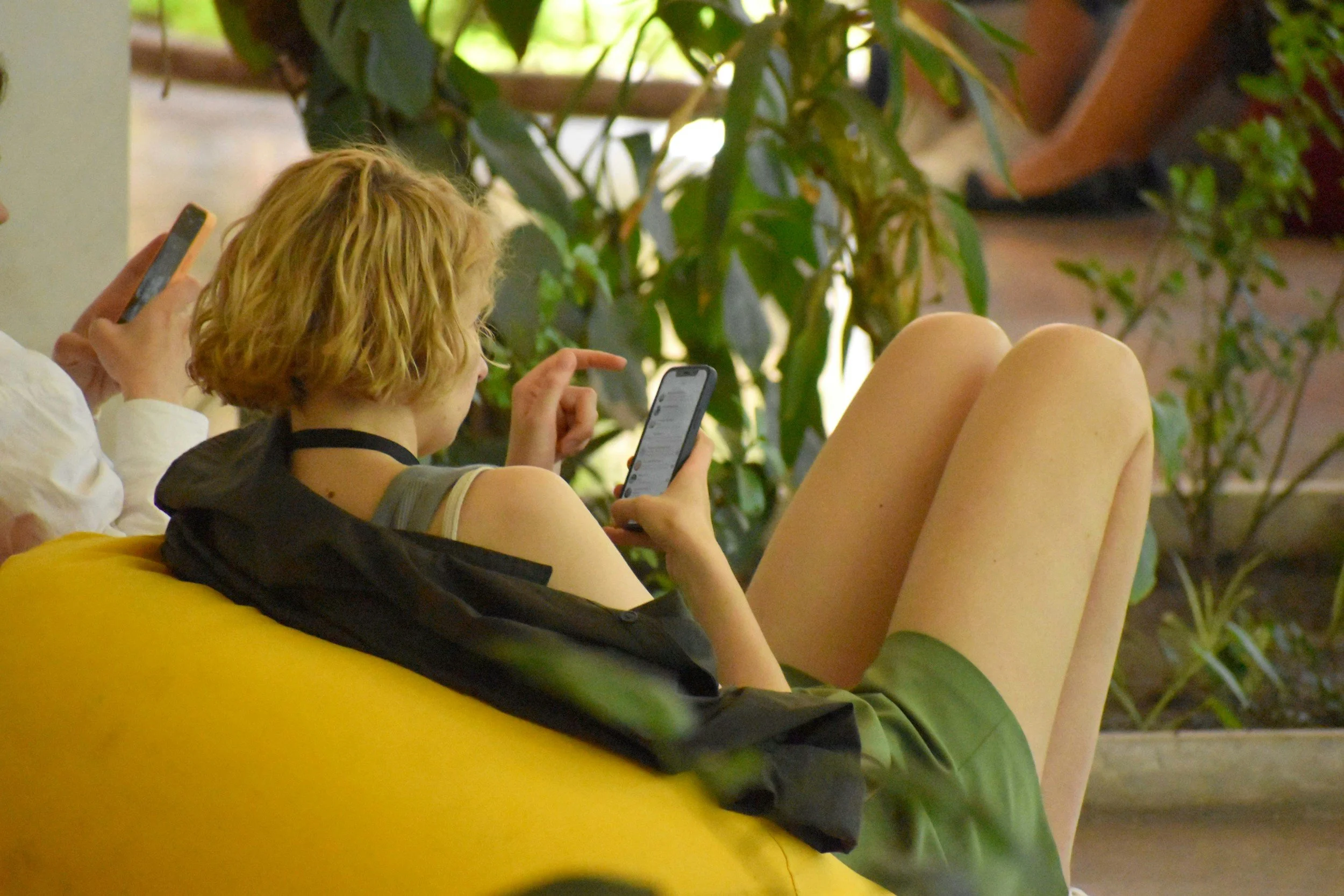
You didn't mean to spend an hour reading about bushfires, global conflict, and economic collapse before bed. You just picked up your phone. And then, somehow, here you are: wide awake at midnight, heart slightly elevated, with a low-grade sense that everything is quietly unravelling.
This is doomscrolling — the compulsive consumption of negative news — and it is one of the most normalised anxiety behaviours of our era.
Why the Anxious Brain Gets Hooked
There's a reason doom-scrolling is so difficult to stop, and it's not a personal failing. It's neuroscience. The amygdala — your brain's threat-detection system — is wired to prioritise danger. Bad news gets attention because your brain treats it as survival-relevant information. 'Keep reading,' it says. 'You need to be prepared.'
The problem is that digital media is infinitely scrollable. There is no natural endpoint, no moment where the news runs out and you can relax. The brain stays primed, waiting for resolution that never comes. And because smartphones are available at any hour, there's no built-in off-switch.
For people already managing anxiety or OCD, doom-scrolling can be a significant compulsive behaviour. It feels like staying informed, being responsible, being prepared — but it's functioning as reassurance seeking or hypervigilance. Each news article is a temporary answer to 'Am I safe? Is the world okay?' The answer keeps shifting, so the checking continues.
The problem isn't that you care. The problem is that the scrolling never lets your nervous system rest long enough to recalibrate.
The DBT Lens: Emotion Mind vs. Wise Mind
Dialectical Behaviour Therapy distinguishes between three states of mind. Emotion mind is reactive, urgent, impulsive — this is the state that grabs the phone at 11pm. Reasonable mind is logical and analytical, but cold. Wise mind is the integration of both: it acknowledges the emotion while asking what actually serves you right now.
Wise mind doesn't say ignore the world's problems. It asks: 'Is reading one more article about this right now going to help me or anyone else?' Often the honest answer is no. Wise mind can hold concern for the world without treating your nervous system as the appropriate vessel for all of it.
Practical Strategies That Actually Help
Time-box your news. Give yourself one or two defined windows to check the news — say, 15 minutes mid-morning and 15 minutes in the late afternoon. Outside of those windows, the feed is closed.
Create a phone-free sleep ritual. The bed is for sleep, not for world events. Physical distance from your phone before bed makes a concrete difference to anxiety levels.
Distinguish between concern and preparation. Ask yourself: is reading this giving me something actionable, or is it feeding the anxiety loop? Concern without action is just suffering.
Notice the shift in your body. Often the first signal of doom-scrolling is a physical one — a tightening in the chest, shallow breathing. Use these as cues to put the phone down, not to read more.
If anxiety is showing up in lots of areas of your life — including how you use your phone — speaking with a psychologist can help you understand what's driving it and how to build a life with more ease.