
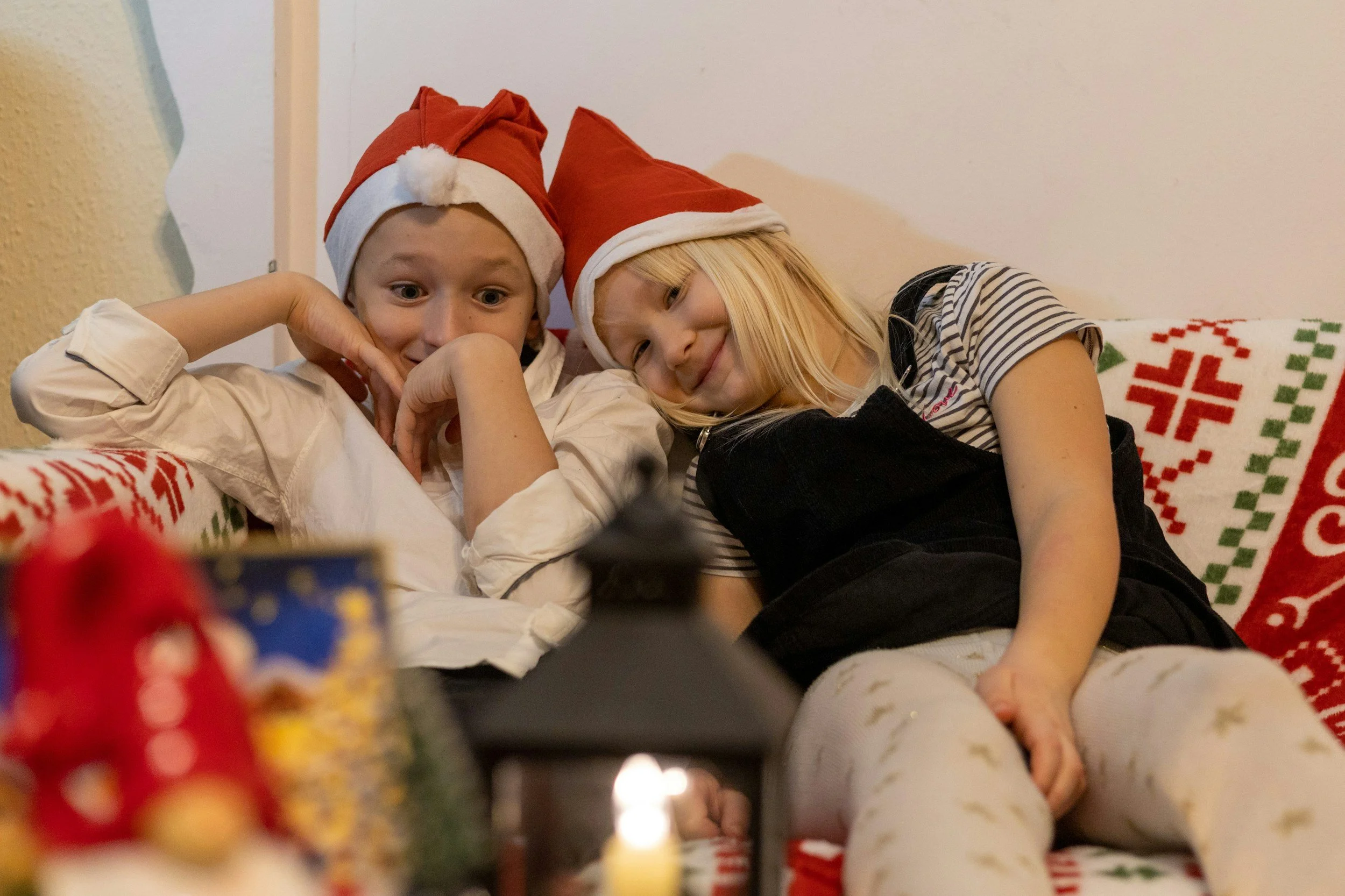
The end of the year arrives in a rush. School concerts, breakup parties, end-of-term exhaustion, late nights, family gatherings and the countdown to Christmas, often all in the same fortnight. Children are excited, and they are also tired. Parents are trying to make it special and they are also stretched thin.
It's no wonder so many families find that the most wonderful time of the year comes with more tears, tantrums and short tempers than expected. Understanding why this happens, and planning for it, can make the season feel calmer and more connected for everyone.
Understanding over-excitement and overtiredness
Excitement and stress look surprisingly similar in the body. Both raise heart rate, energy and alertness. For children, whose ability to regulate their emotions is still developing, a big dose of excitement can tip quickly into overwhelm, especially when they are already running on less sleep than usual.
Overtiredness rarely looks like sleepiness in children. More often it shows up as:
being silly, loud or "wired"
irritability and a shorter fuse
tears over small things
clinginess or difficulty separating
defiance or meltdowns, often at the worst possible moment
When we see these behaviours through the lens of a nervous system that is overloaded, rather than a child who is being naughty or ungrateful, it becomes easier to respond with calm rather than frustration.
Competing demands
The festive season is full of competing needs, and children feel the pull of them as much as adults do. There are multiple households to visit, relatives who want time and affection, traditions to uphold, travel, unfamiliar food and routines, and a long list of social expectations: sit nicely, say hello, say thank you for your present.
For separated families, there may also be the added complexity of moving between homes, managing changeovers and navigating different expectations in each house.
Practical strategies: rhythm, rest and regulation
You don't need to keep every routine perfectly over the holidays, but holding on to a few anchors can make a big difference.
Protect sleep where you can. Not every night needs to be an early one, but try to follow a late night with a quieter day or an earlier bedtime.
Keep some predictability. Talk children through what's coming up each day: who will be there, how long you'll stay, and what will happen next. Visual calendars help younger children.
Build in downtime. Plan quiet pockets between big events, such as time at home, a walk, or a bath and a book. Children need time to come back down.
Have an escape plan. At busy gatherings, find a quiet room your child can retreat to, and agree on a signal they can use when it's all getting too much.
Feed and water often. Hunger and dehydration amplify big feelings, particularly on hot Australian summer days.
Co-regulate before you correct. When a child is overwhelmed, connection comes first. Lower your voice, get down to their level and help them settle before talking about behaviour.
Lower the bar on perfect. A good-enough Christmas, with a calmer child and parent, is usually more memorable than a perfect one.
Looking after yourself too
Children borrow their calm from the adults around them. When parents are exhausted, overcommitted and running on adrenaline, it becomes much harder to respond patiently to an overtired child. That's not a personal failing. It's simply how nervous systems work.
A few gentle reminders for parents:
You're allowed to simplify. Fewer events, simpler meals and fewer presents can all reduce pressure.
Share the load. Ask for help with cooking, hosting or wrapping, and let others contribute.
Notice your own triggers. Family gatherings can bring up old dynamics. It's okay to step outside for a few minutes to reset.
Repair when things go wrong. If you lose your temper, coming back to your child with a hug and an apology teaches them something powerful about relationships.
A calmer kind of Christmas
The festive season will probably never be entirely calm, and it doesn't need to be. Excitement, a few tears and a messy lounge room are all part of it. With a little planning, a realistic view of what children can manage, and plenty of compassion for yourself, it is possible to hold on to the joy while softening the chaos.
If you notice your child's anxiety, behaviour or emotional ups and downs are more intense than usual, or the holidays are feeling particularly hard for your family, the psychologists at Melbourne Wellbeing Group can help. Get in touch to learn more about how we support children, parents and families.