
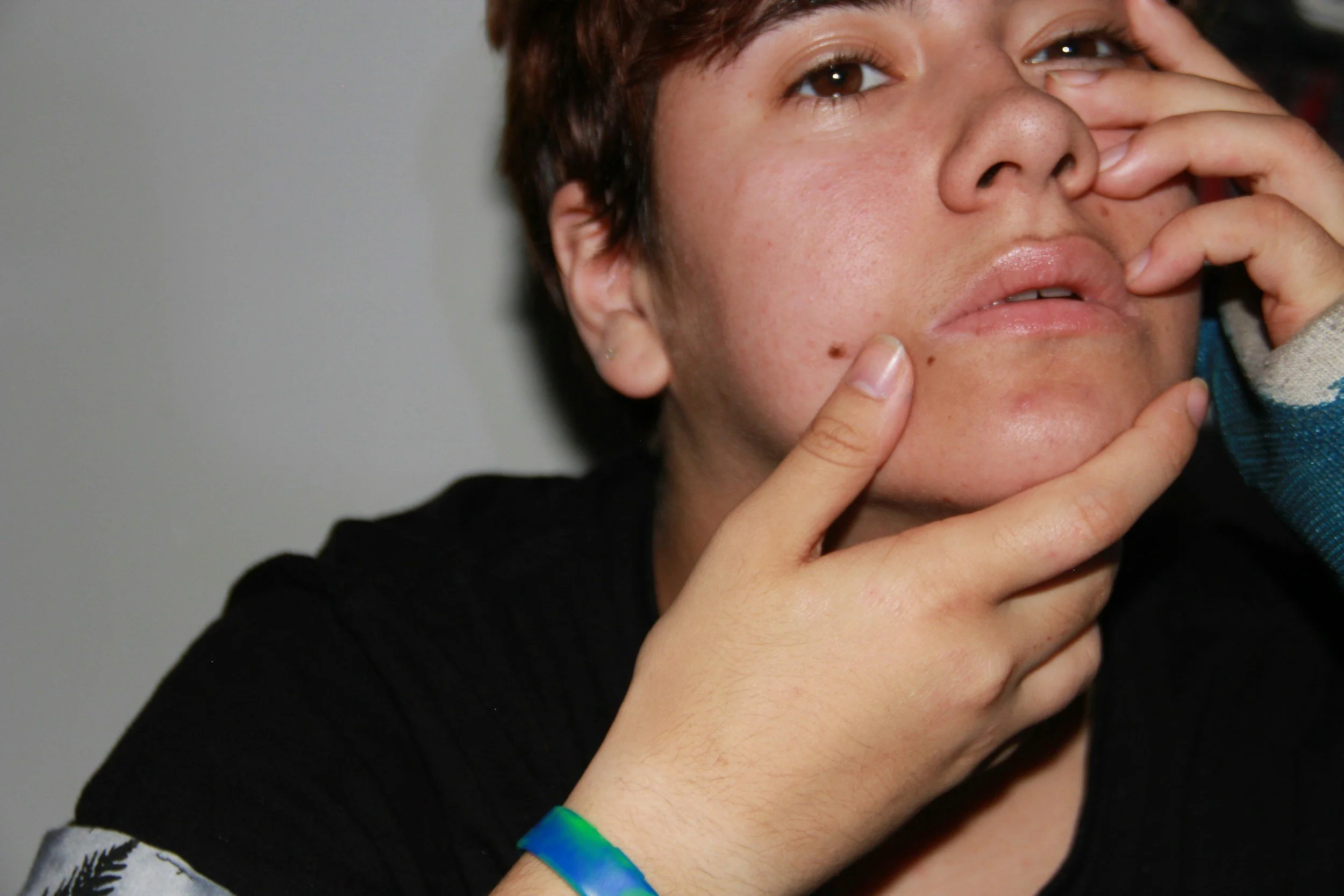
You may first notice small bald patches at the back of your child’s head. Perhaps a row of red marks along their arm, raw cuticles from constant picking, or eyelashes that seem to have thinned without explanation. When you gently ask, you’re told, “I didn’t even know I was doing it.”
Body-focused repetitive behaviours, or BFRBs, are often mistaken for bad habits, boredom, or tics. Many parents spend years wondering why their child pulls their hair, picks at their skin, or bites their nails well beyond the age they expected these behaviours to stop. Many teens and young adults live with deep, quiet shame about behaviours they can’t quite explain or control.
This blog is for parents, carers, and young people who’ve noticed something that doesn’t fit the “bad habit” explanation. We’ll walk through what BFRBs really are, what keeps them going, and the kinds of approaches that actually help.
Understanding BFRBs
BFRBs are a group of related conditions that involve repeatedly pulling, picking, scratching, or biting the body in ways that cause damage. The most common include:
· Trichotillomania – hair pulling, often from the scalp, eyebrows or eyelashes.
· Excoriation (skin picking) disorder – picking at skin, scabs, cuticles, spots or bumps.
· Onychophagia – chronic nail or cuticle biting.
· Dermatophagia – biting or chewing the skin on the fingers, inside the cheeks, or lips.
BFRBs typically begin in childhood or adolescence. For some children, pulling or picking starts in early primary school; for others, it emerges around puberty or during periods of transition. Research suggests BFRBs affect roughly three to five in every hundred young people – yet because of the shame involved, most sufferers keep them hidden for years.
You may notice your child pulling or picking while watching TV, during homework, in the car, or in bed. They might genuinely not be aware it’s happening. At other times, the behaviour is more deliberate – sought out in the bathroom mirror, during a stressful moment, or when a particular sensation in the skin or scalp feels “just not right.”
Why It Happens and What Keeps It Going
BFRBs are not a sign that something is terribly wrong emotionally, and they are not a form of self-harm. They’re best understood as a pattern the nervous system has developed to regulate itself. Once the behaviour is established, it gets locked in through a feedback loop that can be hard to interrupt.
Several factors tend to keep BFRBs going:
· Sensory reinforcement. The behaviour produces a specific physical sensation – a satisfying pull, a “just right” feeling, or the pleasure of smoothing a bumpy patch of skin. The nervous system learns that this feels good, or at least settling.
· Emotional regulation. Many young people find that pulling or picking quietens uncomfortable feelings – boredom, restlessness, anxiety, frustration, or overwhelm. The behaviour becomes a way, often unconscious, of managing emotion.
· Automatic versus focused patterns. Some episodes happen without awareness, while others are deliberate and drawn out. Most young people show a mix of both.
· Cognitive patterns. Thoughts like “just one more”, “this one’s different”, or “I’ll stop once this spot clears” keep the behaviour looping. Perfectionism and black-and-white thinking often play a role.
· Shame and secrecy. After an episode, young people often feel ashamed, try to hide the damage, and avoid talking about it. Shame raises stress, which raises the urge to regulate – which tends to increase the behaviour.
· Co-occurring patterns. BFRBs often sit alongside anxiety, ADHD, OCD or sensory sensitivities, though they can also occur on their own.
Practical Strategies
BFRBs respond well to structured, evidence-based support. The ideas below are drawn from Habit Reversal Training (HRT) and the Comprehensive Behavioural (ComB) model, both widely used approaches in BFRB treatment.
For children and teens
· Build awareness first. Most pulling or picking happens on autopilot. A simple step is tracking such as making a small tally each time you notice, without judgement. Awareness is the doorway to change.
· Map your high-risk situations. For many, the behaviour happens in particular places such as on the couch after dinner, in the bathroom, during homework, in bed, or in the car. Knowing where and when it’s most likely helps you plan ahead.
· Introduce sensory alternatives. BFRBs serve a purpose, and that purpose needs replacing, not just blocking. Useful substitutes include fidget toys, textured bands, stress balls, chewing gum, a hair comb, or a scented lotion. The best alternative is one that matches the sensation your body is seeking.
· Use gentle barriers. Plasters on the fingers, gloves in bed, long sleeves, caps, or hair clipped up can reduce opportunity without feeling punitive.
· Redirect, don’t scold. When you notice yourself starting, try to pause, take three slow breaths, and choose something else. Beating yourself up tends to make the cycle stronger, not weaker.
For parents and carers
· Drop the “just stop” message. Willpower alone rarely works with BFRBs, and repeated requests to stop usually increase shame without reducing the behaviour.
· Keep conversations non-judgemental. Try, “I’ve noticed this seems to happen when you’re tired or studying. Want to figure it out together?” rather than “Why are you doing this again?”
· Ease off constant monitoring. Hovering, inspecting, or commenting on hair or skin tends to backfire, raising anxiety and secrecy. A quieter, steadier presence works better.
· Support the environment, not the behaviour. Make sure there are regulating options easily available such as fidgets near the homework area, good lighting, movement breaks, a comfy blanket. Also, model your own healthy self-regulation.
· Work together on triggers. Notice what tends to come before episodes: tiredness, screen time, boredom, schoolwork, or hormonal shifts. This information is gold for planning next steps.
What to say (and not to say)
Instead of: “Stop that, you’re making it worse.”
Try: “I can see you’re pulling. What’s your body looking for right now?”
Instead of: “Look at what you’ve done to yourself.”
Try: “I’m on your team. Let’s think about what might help tomorrow.”
When to Seek Support
If a BFRB is causing noticeable damage, taking up significant time, affecting your young person’s mood, friendships or school life, or feels impossible to control, it’s worth reaching out. A psychologist trained in BFRB treatment can work with you and your young person using evidence-based tools like Habit Reversal Training, the ComB model, and ACT-based strategies. Early intervention makes a real difference, especially before patterns become deeply entrenched.
A Final Word
BFRBs are not a bad habit, a phase, or a failure of willpower. They are real, treatable conditions that many Australian children and young people quietly experience. With compassion, structure and the right support, change is absolutely possible – and the first step is understanding that what’s happening is neither your child’s fault, nor yours.
If you’re watching a young person struggle with pulling, picking, or biting, know that you don’t have to work this out alone. Support is available, and it can make more of a difference than most families expect.
Our highly trained psychologists can help. Please call our team on 9882-8874 to book in with one of our team members today. Alternatively fill in our contact form here to get in touch.
To subscribe and listen to our podcast “Breaking the Rules: A Clinician’s Guide to Treating OCD”, click on the following links: Spotify, Google Podcasts, and Apple Podcasts. Episodes will be released fortnightly and will simultaneously be published on our webpage here.